
Image
Does this content have any political face?
No
Solid Waste Management: Challenges, Implementation, and Progress
1. The Problems
Effective solid waste management continues to face several challenges that impact cleanliness, environmental sustainability, and public health.
One of the major concerns is the lack of awareness among the public regarding solid waste management practices and the proper 4(four) stream segregation at source of different types of waste generated. Many waste management units like Mini Material Collection Facility and Central Material Collection Facility require improvement and utilization at ground to meet the growing demands for efficient waste collection, processing, and scientifically sound disposal.
Another significant challenge is the absence of large-scale scrap dealers/aggregators in the region, limiting opportunities for recycling and the efficient recovery of recyclable materials.
2. The Implementation
To address these challenges, several initiatives have been implemented through the co-ordinated efforts of government departments from PHED to P&RD and ASRLM, local bodies, institutions, and local NGOs. Awareness programs are being conducted across different sections of society to sensitize citizens on waste segregation, disposal, and environmental conservation.
Special awareness campaigns are also being organized in schools, educational institutions, and communities to encourage responsible waste management practices from an early age. Also there is need for active community participation for scientific handling and management of various types of solid waste.
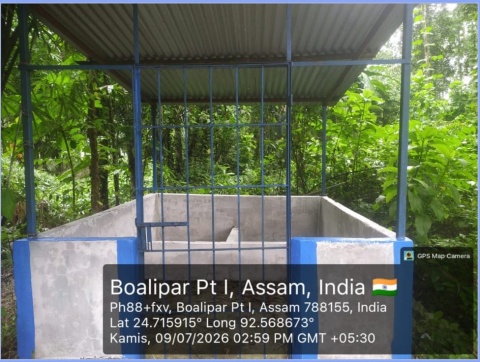
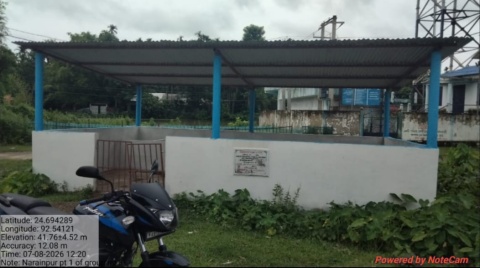
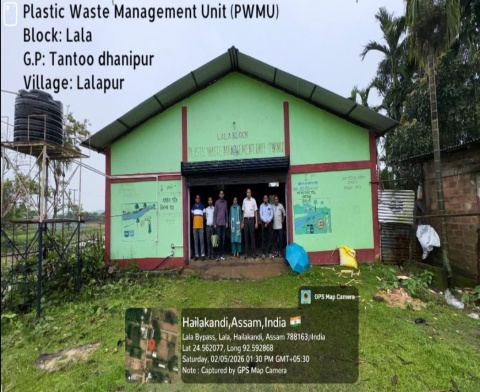
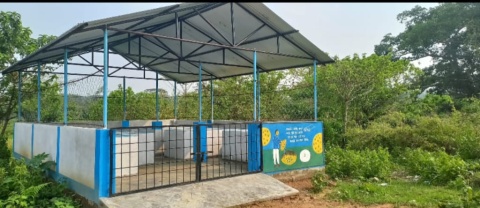
Various types of waste management facilities have been constructed at the ground level to strengthen the implementation of solid waste management and ensure the effective processing, recovery, and disposal of generated waste. These include Mini Material Collection Facilities (MMCFs) and Central Material Collection Facilities (CMCFs), which are designed for the collection, segregation, and storage of solid waste. Plastic Waste Management Units have also been developed to facilitate the recycling of plastic waste, while community-level compost pits have been constructed for the scientific treatment of biodegradable waste. In addition, a paver block manufacturing unit has been sanctioned under the project titled "Garbage to Gold" to recycle plastic waste into value-added products, such as paver blocks, for use in the construction of roads and pavements.
3. The Progress
A total of 295 Mini Material Collection Facilities (MMCFs) and 62 Central Material Collection Facilities (CMCFs) have been set up across the Gram Panchayats (GPs) of the district. Additionally, 4 Plastic Waste Management Units have been set up in different development blocks to facilitate the scientific recycling and processing of plastic waste. To promote the effective management of biodegradable waste, 80 Community Compost Pits (CCPs) have been constructed at Gram Panchayat and tea garden areas across the district. For strengthening the door-to-door collection of solid waste in the RLBs, 62 battery-operated waste collection vehicles are being distributed among the Gram Panchayats under Hailakandi district. Furthermore, 43 Non-Governmental Organizations (NGOs) have been engaged till date at the GP level to support effective monitoring and the proper implementation of the Solid Waste Management Rules, 2026.
Photo 1: Mini Material Collection Facility (MMCF) Image
Does this content have any political face?
No
| Photo 2: Central Material Collection Facility (CMCF) Image
Does this content have any political face?
No
|
Photo 3: Plastic Waste Management Unit Image
Does this content have any political face?
No
| Photo 4: Community Compost Pit / Waste Management Activity Image
Does this content have any political face?
No
|
| Title | Size | Type |
|---|---|---|
| Solid waste management rules 2026 | 1.45 MB |
